Officer Long
On the Come UpOfficer Long is a security officer at Midtown School of the Arts whose treatment of Brianna Jackson becomes a pivotal part of the novel’s critique of racialized suspicion. Alongside Officer Tate, he restrains Brianna and accuses her of bringing something into school; a partial recording then circulates under a caption falsely identifying her as a drug dealer, shaping how the incident is seen beyond the school.
Identity and Introduction
Long is identified through his position as a school security officer, not as a police officer. When he and Tate restrain Brianna, she explicitly recognizes that distinction, even as the encounter leaves her unable to speak. His authority is institutional and immediate: he can seize her and search her belongings, while she has little power in the moment to contest his actions.
Before the incident, Brianna has already encountered the barriers facing a young woman entering rap. Aunt Pooh warns her that she will have to work twice as hard for half the respect, remain as tough as the men around her, and avoid appearing weak. That context makes Long’s later insult part of a broader pattern in which Brianna is judged not only as a student but through assumptions about her race, age, gender, and neighborhood.
The School Restraint
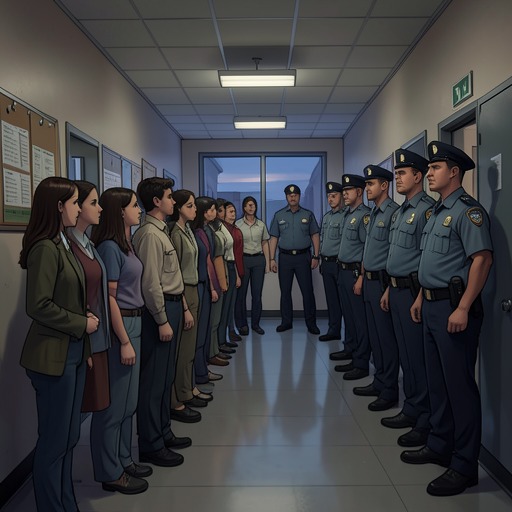
During the encounter at Midtown, Brianna tells Long and Tate to take their hands off her. Long grabs her arm again and pulls it behind her; when she struggles to get away, he tightens his grip. He and Tate take her to the ground, and while Long holds her down, Tate removes her backpack. Sonny shouts for them to stop, and Malik points his camera at the scene.
Long then accuses Brianna of having brought something into school and wraps plastic around her wrists. He calls her a hoodlum and taunts her about the way she had spoken the previous day. Brianna cannot answer him. The episode shifts the meaning of her visibility: she had wanted to be noticed as a rapper, but afterward she is quiet on the ride home and wishes she could disappear.
Labels and Public Representation
The word Long uses follows Brianna beyond the encounter. She turns it over in her thoughts, listing its associated labels—thug, delinquent, hooligan, lowlife, and gangster—and recognizing that, in Long’s account, it has become a name for her. She briefly imagines a rhyme built around the insult, then rejects it. The moment shows her trying to reclaim language without accepting the judgment embedded in it.
A video of the restraint is uploaded without showing Long and Tate throwing her down or the events that led up to it. Its uploader calls it “Drug dealer caught at MSOA.” That caption supplies a story the footage does not establish, and the label becomes another public identity imposed on Brianna. Later, Blackout places a photograph of her performing in the Ring beside a headline identifying her as the daughter of murdered underground rap legend Lawless, while embedding “On the Come Up” from her Dat Cloud page. Her name is omitted from the headline even as her image and song are used to frame her for an audience.
The distinction between Brianna’s own words and the labels attached to her becomes more contentious when “On the Come Up” is broadcast after a Midtown student rally turns violent. News coverage calls the song violent and suggests that it encouraged students to act against school officials; classmates chant its lyrics while taunting officials. In the later Hot 105 interview, Hype cites a lyric about being armed and being “lawless” as evidence that Brianna implies she would kill police. Brianna rejects that interpretation and points out that the same reaction was not applied to her father when he rapped about such subjects at sixteen. The public debate thus connects the treatment of her song to the gendered expectations already evident in Long’s encounter.
Institutional Consequences and Significance
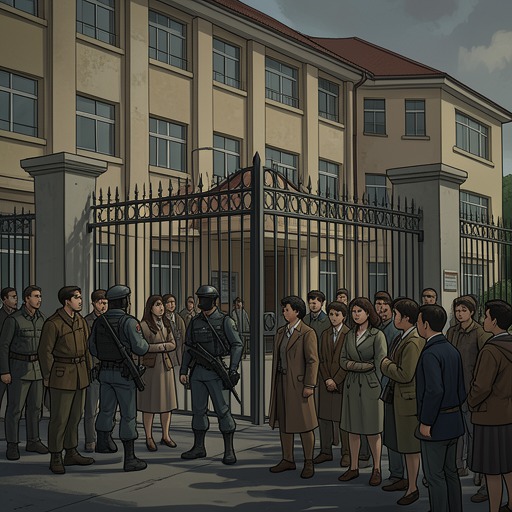
At a Midtown school district meeting, Shana Kincaid says that students had filed complaints against Long and Tate, and that video shows the officers physically assaulting a Black student. She challenges the school’s decision to allow them back on the job. Dr. Cook acknowledges that racism and racial profiling are unacceptable but says an ongoing investigation limits what he can say about the specific incident. The meeting makes clear that the confrontation has become part of a larger institutional dispute about student safety, accountability, and whose accounts are accepted.
Long’s role is consequential less because the evidence establishes his personal history or motives—it does not—than because his actions and words set a chain of representation in motion. Brianna’s restraint is recorded without its full context, recast as a drug-dealer incident, and subsequently entangled with arguments that treat her lyrics as an explanation for student unrest. The novel’s account distinguishes what happened to her from the assumptions circulated about her, showing how an officer’s accusation can outlive the encounter and shape both public perception and the debate over the school’s response.